

“Râfaga – Unleashed” by Veronica de Nogales Leprevost and Edwin Dam – Pier 8, Hamilton
“Râfaga – Unleashed” by Veronica de Nogales Leprevost and Edwin Dam – Pier 8, Hamilton
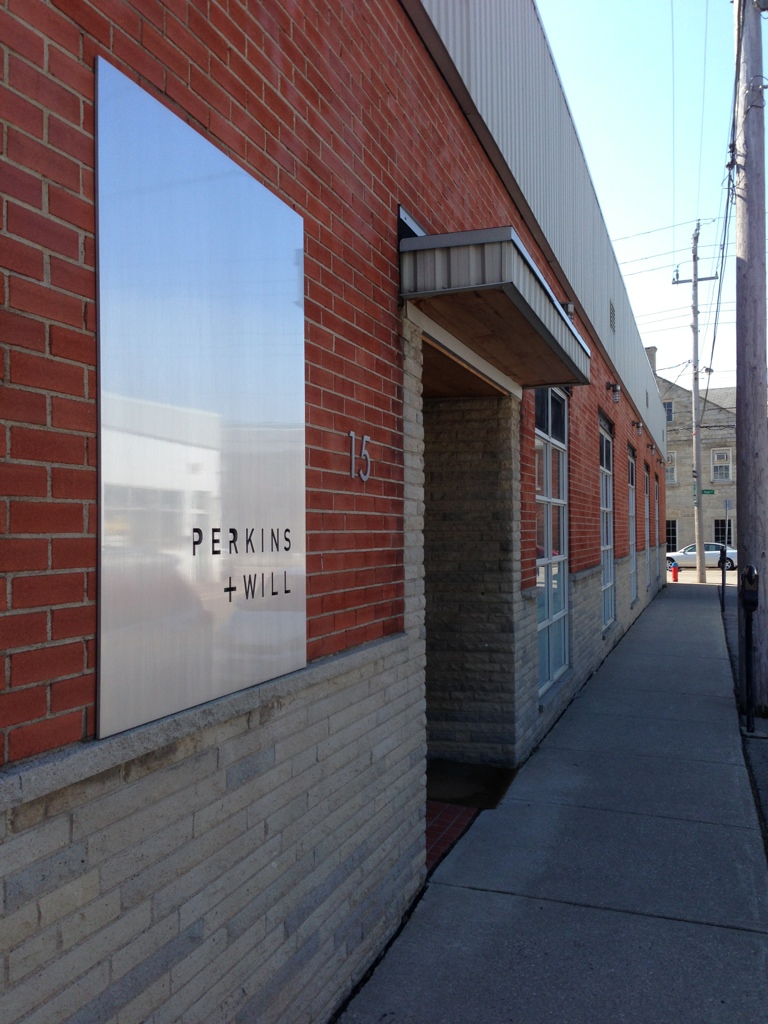
Perkins + Will Architects – 15 Foundry St, Dundas
By: Katie Stoneman
Hamilton’s Claremont access will soon get an artistic facelift, and it won’t be at the hands of graffiti artists. The plan is to commission a mural for the walls of the Claremont access that faces Carter Park.
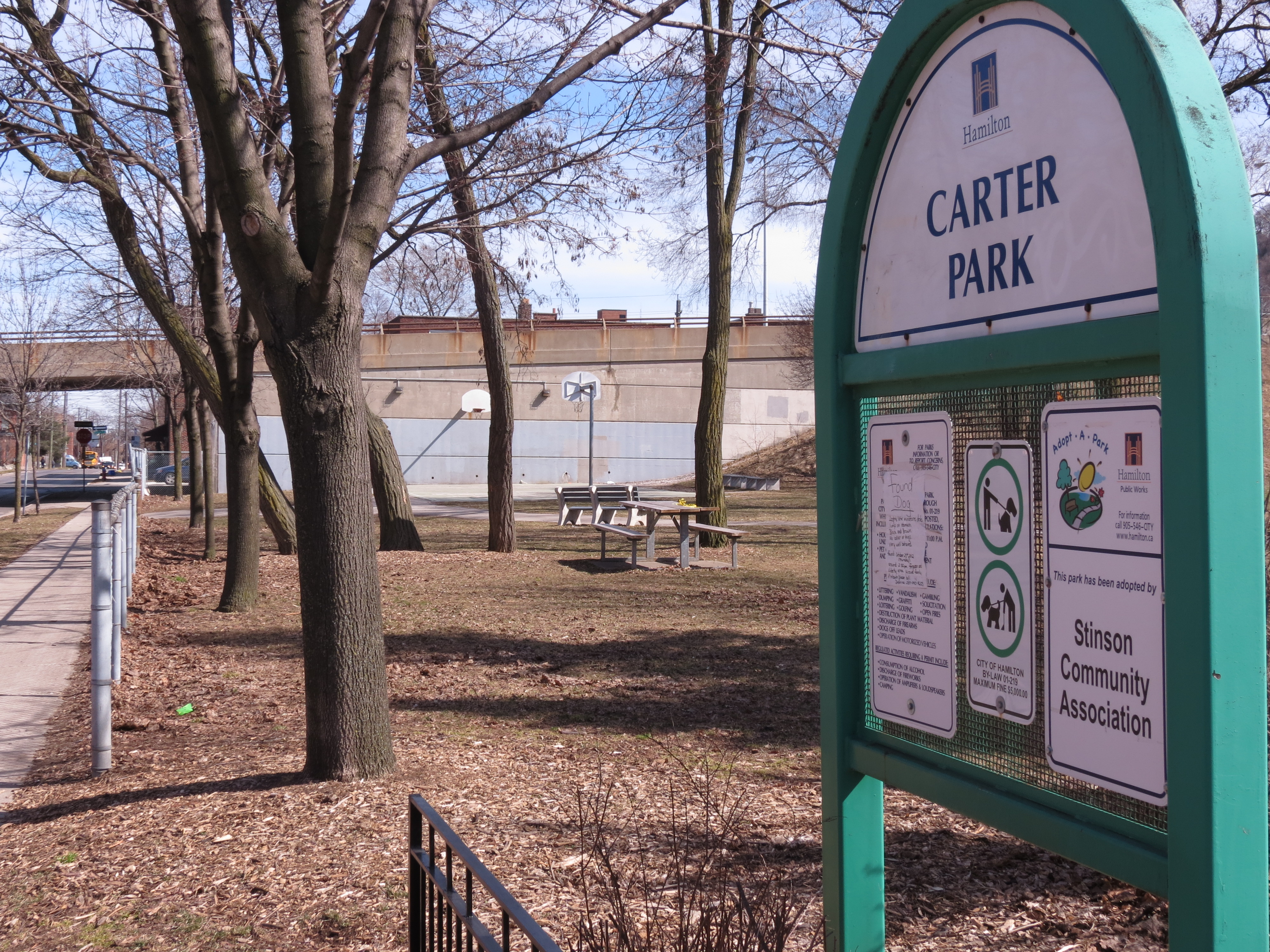
“The Carter Park art mural will represent a new beginning for our neighbourhood and we are very excited about it,” said Brian Goodman, president of the Stinson Community Association.
An open call to artists for the Carter Park mural is currently being prepared and should be released this month. The mural will be located on the concrete wall of the Claremont access that is considered quite an eyesore in the area.
A report from the focus group for the project outlines the goals of the mural. The report states that, “The Claremont access does not contribute to the quality of the park and is seen as physically dividing the neighbourhood. Any art work should minimize (the Claremont Access’s) impact on the park.”

“The mural will be an immediate focus point, an attraction and will give life and meaning to that cold impersonal wall. In an underlying way it suggests pride, safety, and announces there is a wonderful community here,” said Goodman.
The city had an open call for artists for the same project last year, but the mural was never completed.
Part of the issue was problems some artists were having with the city’s art procurement process. Complaints were made about having to pay the non-refundable fee of $64.99 online or $45.99 in person for the Request for Proposal documents. The process has since been reviewed and revised.
The review suggested that the fees be waived, and that the responsibility of the administration of the Public Art Acquisition Process be turned over to the Tourism and Culture Divisions city staff.
Another part of the issue was with the submissions made last year.
“The jury didn’t feel they got the propositions they wanted,” said Ken Coit, the City of Hamilton’s Art in Public Places Coordinator.
The jury, which remains confidential, is different for each project. The focus group, or jury, is usually made up of artists, stakeholders, business people and other people with an interest in the project.
“It usually takes three to four months once we actually have the submissions in. We have to leave time for the artists process,” said Coit.
There are currently two other pubic art projects that are in the consultation stage for the city of Hamilton, including the Battlefield Park art competition.
The consultation stage asks the public for their opinion on the proposed art projects. For Battlefield Park there are three propositions under a theme that interprets the outcomes of Battle of Stoney Creek and the War of 1812.
“The importance of a public art project cannot be understated. Besides providing a point of interest, it provides a dialogue that transcends what language you speak, what religion you follow, or what mental state you are in,” said Goodman.
This article is also abbreviated and published at The Bay Observer and in April’s print edition
Filed under Development, Economy, Entertainment, Uncategorized
MARC – McMaster University Automotive Resource Centre
Longwood Rd. and Frid St.
Perkins + Will Architects
In development
MARC is McMaster University’s new automotive research centre that is currently being built in the shell of an old industrial building at the north end of the Careport Centre.
The exterior of the building is getting a major facelift. Floor to ceiling windows now surround the new atrium on the eastern end of the building that was originally just loading docks. The old corrugated rusty grey steel has been replaced by darker gunmetal coloured steel, accented with grey panel cladding and celestial windows. The 14 loading docks have been narrowed to four, the ten docks replaced by a red brick wall with ground level windows.
The centre will occupy approximately 70 000 square feet of space, with 50 000 square feet on the first floor and the remaining square footage on the second floor. The space will be comprised of labs, offices, and common areas.
McMaster’s Automotive Resource Centre is the latest addition to the McMaster Innovation Park and will provide a place for the research and development of green automotive technologies. The university received an $11.5 million grant from FedDev Ontario, a federal agency launched in August 2009 to help respond to Ontario’s economic challenges. The project will cost approximately $26 million and 120-150 people from the private, public, and academic sectors will be employed at MARC.
Filed under Architecture, Development, Economy, Uncategorized
Remember Harry Stinson’s proposed 100-storey spire for the Royal Connaught? Thankfully, Valery Homes and Spallecci Group have a better idea.

Harry Stinson’s proposed 100-storey spire for the Royal Connaught
In partnership with KNY Architects, these developers plan to construct a residential building that pays homage to the Royal Connaught’s rich history, while retrofitting it with a new look.
The plan is to revitalize and incorporate the existing Connaught, and add three new towers. These three towers will be superimposed beside, as well as behind the Connaught, to surround the existing building. The new towers will be 36, 33, and 24 storeys, with 700 units in total.
Artist renderings show the new, more contemporary-looking towers consisting of a smoky grey glazed glass that rises up the entire height of the towers. Historical elements incorporated into the new towers, like the Connaught’s large overhanging cornice and signature red brick, will accent the juxtaposing modern additions.
The new development will fill all but a corner of the block that surrounds Main and King, between John and Catherine. Access to parking for the complex will be via Catherine Street and will include two underground levels and seven above.
A seven-storey podium will also be added, that is meant to compliment the Connaught and connect the additional towers. The podium will have an accessible rooftop balcony on the eighth floor that will offer several amenities for residents of the towers. Some of the amenities listed include a theatre, fitness center, party room, and a terrace complete with cabanas and fire-pits. At ground level, the podium will offer 13 000 square feet for commercial space along King Street, Catherine Street, and Main Street.
The Royal Connaught itself will be going through some major changes. The upper floors will be reconstructed to include the eighth-floor connection to the additional three towers. The southern end of the building, a three-storey addition that contains the Grand Ball Room, will be demolished to accommodate the new towers. The Edwardian façade, with its red brick, limestone, and large arcade-style windows will remain largely untouched. Once finished, the 13-storey Connaught will consist of 135 units.
Built by Harry Frost in 1914, the Royal Connaught hotel has changed hands several times through its lifetime. It has also played host to some of the most notable visitors to ever come to Hamilton, including Pierre Trudeau and Al Capone.
Residences are said to start at around $100,000. For more information visit: www.royalconnaught.com
Filed under Architecture, Development, Economy, Heritage, History
Notice anything different? Rebuild Hamilton is going through some minor changes. One of the first changes is a beautiful new header – what a nice satellite image of Hamilton!
Special thanks to Katherine Lamb for designing this new header – she did a fantastic job.
Kat is a talented photographic artist, as well as graphic designer, living in the Hammer. You can visit her personal blog at http://miss-lamb.blogspot.ca/ and see some of her amazing portfolio work at http://www.katherinelamb.com/
Coming soon…
The Royal Connaught
Part 2 of “A Portrait of a City”
and more!!!
Filed under Uncategorized
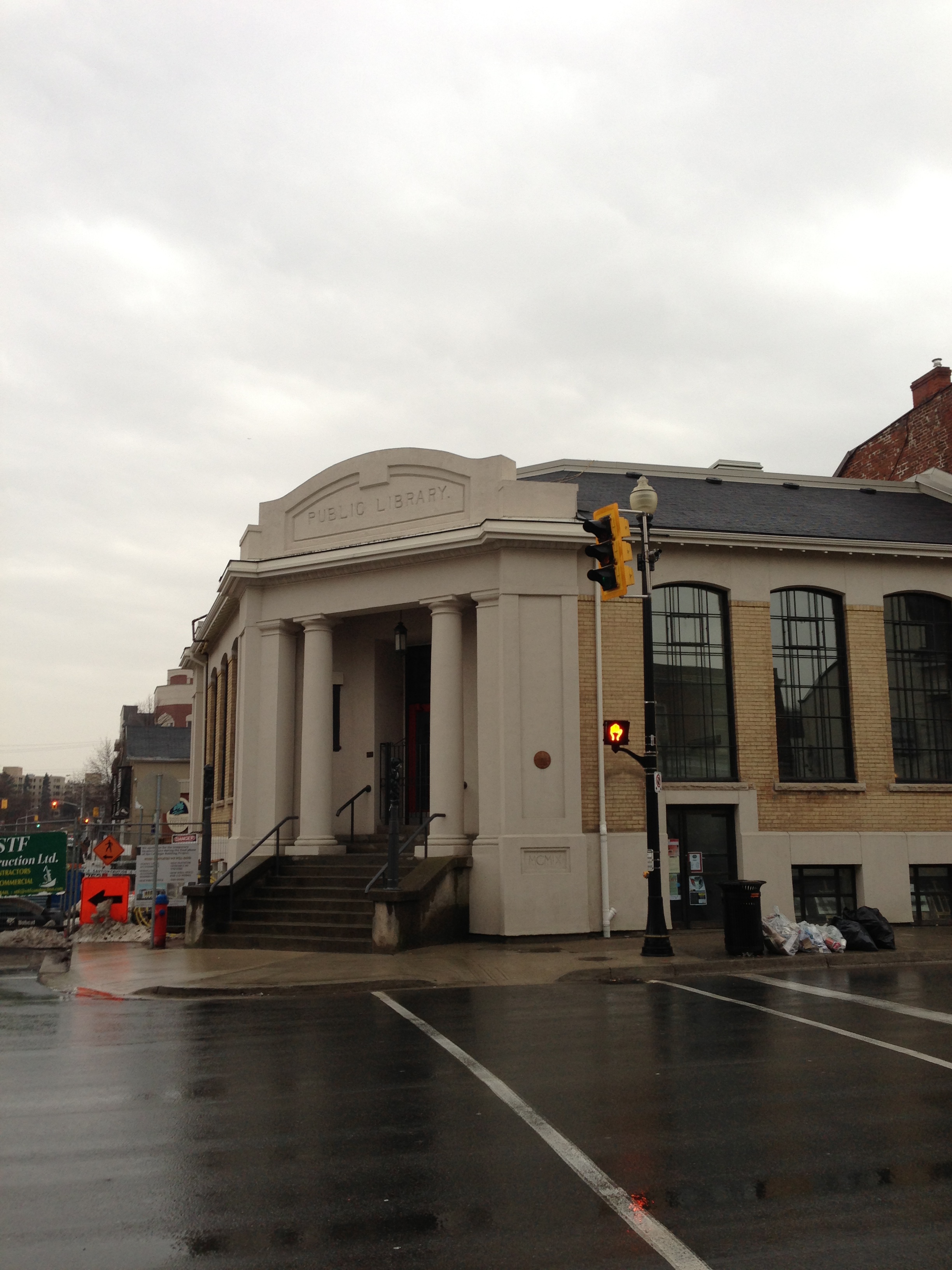
Carnegie Gallery on King Street W and Ogilvie Street, Dundas
One of the most beloved heritage buildings in Dundas is getting both a facelift and a new addition.
Carnegie Gallery is in the midst of a revitalization project by Dundas-based architects Perkins + Will. The changes being made to the gallery include street level accessibility, a wheelchair accessible washroom, a visitor operable elevator, and some extra gallery wall space, among others.
The street level accessibility will be on Ogilvie Street, via the new addition. This addition will be an atrium, which is superimposed against the southern side of the building. The atrium will feature large floor-to-ceiling windows facing the street and a brick accent that should fit seamlessly with the building’s existing exterior.
The building is a neoclassical (or beaux arts) design, with its tall staircase, portico, doric columns, and half columns.
Originally Carnegie Library, the building first opened its doors on December 8th, 1910. The city was one of 111 cities in Ontario (125 in Canada) to receive a grant of $12 000 USD from the Carnegie Foundation. Pittsburgh steel tycoon Andrew Carnegie created the foundation to promote education. In order to qualify for the grant, a municipality had to be able to provide library maintenance by raising an annual amount of one-tenth the grant, from taxes.
The library stayed open until 1970, when a new municipal library was erected further south on Ogilvie Street. The space was converted into a children’s library that lasted only ten years, after which, it was then leased to the Dundas Art and Craft Association.

Heritage Plaque on the side of Carnegie Gallery
In 1980, Carnegie Library was designated as a heritage building and was converted into Carnegie Gallery in 1981. The building was later purchased by the City of Hamilton in 2006.
Carnegie Gallery currently exhibits bodies of work by local artists and contains a gallery shop that sells art and other goods.
The Province of Ontario has provided the Dundas Arts Community Foundation with a 1.2 million dollar grant for the Carnegie Library Revitalization project.
Filed under Architecture, Heritage
Riccio Towers
Upper James St S. and Stone Church Rd
KNY Architects
In proposal
Riccio Towers is a proposed condominium development that would be situated at the corner of Upper James and Stone Church, on the Hamilton Mountain.
At grade, the towers would have a connecting podium with storefronts for commercial usage. The two towers are of a contemporary design, consisting primarily of glass, with an offsetting inward twist at each floor – a design similar to the Absolute World towers in Mississauga (which just won the archdaily.com Building of The Year award). Both towers would be 30 storeys, with a combined total of 290 units. There are also townhouses proposed for the eastern side of the development – making for an easier, more seamless transition with the surrounding neighbourhood of low-rise buildings, townhouses, and detached homes.
Although this proposed development could be a great addition to the city’s core (the design would undoubtedly add beauty to the downtown skyline), these towers would be a daring, groundbreaking fit into the ever-growing Hamilton Mountain. Additionally, Riccio Towers would also make an easy to spot landmark for the mountain – a reference point for wayfinding in an area surrounded by big box stores, strip malls, and low-rise buildings.
This development would be close to a number of amenities, including the John C. Munro Airport, and just a short drive to the Lincoln Alexander Expressway and the downtown core.
Filed under Architecture, Development
 Rebuild Hamilton