Tag Archives: #HamOnt

Architectural Spotlight: Riccio Towers

This slideshow requires JavaScript.

Riccio Towers
Upper James St S. and Stone Church Rd
KNY Architects
In proposal

Riccio Towers is a proposed condominium development that would be situated at the corner of Upper James and Stone Church, on the Hamilton Mountain.

At grade, the towers would have a connecting podium with storefronts for commercial usage. The two towers are of a contemporary design, consisting primarily of glass, with an offsetting inward twist at each floor – a design similar to the Absolute World towers in Mississauga (which just won the archdaily.com Building of The Year award). Both towers would be 30 storeys, with a combined total of 290 units. There are also townhouses proposed for the eastern side of the development – making for an easier, more seamless transition with the surrounding neighbourhood of low-rise buildings, townhouses, and detached homes.

Although this proposed development could be a great addition to the city’s core (the design would undoubtedly add beauty to the downtown skyline), these towers would be a daring, groundbreaking fit into the ever-growing Hamilton Mountain. Additionally, Riccio Towers would also make an easy to spot landmark for the mountain – a reference point for wayfinding in an area surrounded by big box stores, strip malls, and low-rise buildings.

This development would be close to a number of amenities, including the John C. Munro Airport, and just a short drive to the Lincoln Alexander Expressway and the downtown core.
4 Comments

Filed under Architecture, Development

Part One: A “Portrait of a City” then and now

Over the last 67 years much has changed in Hamilton. In the 1946 promotional video “Portrait of a City” there is a lot to compare between Hamilton’s past and present. Here, in this three part series, is a timeline breakdown of the video:

1:47 — Dundurn Castle is one of Hamilton’s most visited and notable sites. It was home to Sir Allan MacNab – one of Canada’s first Premiers. Before the castle was erected, the British used the site as a military post during the War of 1812. Later, when English architect Robert Wetherall was designing the building, MacNab had him incorporate some of the military post into the overall design. The castle was constructed between 1832 and 1835.

3:14 — Did you notice the streetcar on King Street? Believe it or not, Hamilton used to have streetcars (hence, the term “Hamilton Street Railway”). They were in use until 1951, when changes to the city’s transportation infrastructure began and streets were being converted from two-way to one-way. Over 60 years later, with a big push from former Mayor Fred Eisenberger and the support of the Provincial Government, LRT talks were back on the table in Hamilton (although these talks have since stalled).

3:30 — Hamilton still has a prime geographical location in the centre of the Golden Horseshoe. Here is a current list of cities and their proximity to Hamilton, via Hamilton Economic Development.

4:46 — Liuna Station, located on James St. North, is a train station turned banquet hall that was designed by Canadian National Railway architect John Scholfield. Built between 1929 and 1930, the station is of a neo-classical architectural design. The southern façade, a beautiful feature of the building, has a deep portico, with Doric columns that pay homage to Parthenon. Liuna Station was in service until 1993 and sat abandoned until 2000, when it was renovated and converted into a beautiful banquet hall that hosts some of the most distinguished balls and benefits in the city – a great example of heritage preservation.

5:19 — Hamilton’s port lands are slowly receding into recreational waterfront – which is important for the future development of Hamilton – due to the city’s shrinking industrial economy. However, there is still plenty of activity in the bay. For example, the ongoing remediation plan for Randle Reef, which proposes more commercial space, as well as some pedestrian-friendly amenities.

Stay tuned for the second instalment…

1 Comment

February 25, 2013 · 1:43 pm

Video: Portrait of a City

Check out this video called “Portrait of a City”. It’s a promotional video for Hamilton from 1946.

Notice anything significant? For example, how we used to have LRT?

I will be writing a piece about this video later this week, comparing Hamilton’s past with it’s present and future.

Stay tuned.

1 Comment

February 17, 2013 · 5:13 pm

If you build it, they will come

2013 looks to be a very promising year for the City of Hamilton. From the West End to the East End we will be seeing a lot of new developments gracing the city’s skyline.

Among these new developments are:

This slideshow requires JavaScript.

Urban West – 427 Aberdeen
Aberdeen Ave and Dundurn St. S
KNY Architects
New Horizon Developments
Starting at $233,990

Urban West is situated at the corner of Dundurn and Aberdeen. Sitting near the Niagara Escarpment, it offers a beautiful view of the city.  At grade the exterior of the building is composed of stone, followed by two floors of brick, as well as stucco accents that run vertically to the top of the building. The building also has plenty of glass, offering more natural sunlight and panoramic views.

This seven-storey complex consists of two floors of parking space, seven units for the next four floors and five larger penthouse units on the seventh floor. The location of Urban West is one of the best in the city. It is close to a number of amenities including Locke Street, McMaster University and the downtown core.

This slideshow requires JavaScript.

City Square Parkside Condominiums
Charlton St and Park St. S
KNY Architects
New Horizon Developments
Starting at $206,999

City Square has been one of the hottest new additions to Hamilton’s real estate market. The Square will consist of three towers (the first one is selling out quickly). This complex is situated in the heart of Hamilton’s historic Durand District. These condominiums are beautifully designed by KNY Architects. The architecture is Art Deco-inspired, consisting primarily of stone and glass with a stucco finish, accented with a steel mansard style roof.

All three condominiums will be nine-storeys, with 75 units. There will be underground parking provided on site, as well as some surface amenities. City Square is also adjacent to Durand Park and within walking distance of Locke Street, James Street, and the city’s core.

This slideshow requires JavaScript.

Homewood Suites by Hilton
Main St. W and Bay St. S
DCYSA Architects
Vrancor Developments

Homewood Suites by Hilton is being built in the heart of the city and right across from McMaster’s new Downtown Health Campus. The hotel is also just a stone-throw away from Hess Village, Copps Coliseum, Hamilton Place, the Art Gallery of Hamilton, and other amenities in the downtown core.  Built on the lot that once was occupied by HMP Motors, these suites promise to be a major boost for Hamilton’s core.

The hotel will feature a post-modern architectural design. It will be 15-storeys, with 182 rooms and suites. The hotel will include retail shops at street level, a restaurant, a gym, and a convention centre for meetings.

Leave a comment

Filed under Architecture, Development, Economy

Changes coming to Gore Park

Call it the end of an era, a new chapter, or a failure. No matter what you call it, change is coming to Gore Park.

As of January 9th, developer Wilson Blanchard was cleared by City Council for the demolition of 18-28 King Street East – a series of four row houses on the south side of Gore Park – to make room for a mixed-use condominium development. However, after community opposition, Blanchard has decided to withdraw his application to demolish all but two of the buildings. But was this a fair compromise?

This slideshow requires JavaScript.

These four Victorian-era row houses were erected between 1840 and 1875. Renowned architect William Thomas (famous for St. Lawrence Hall in Toronto) designed the three-storey buildings, 18 and 22 King Street (which Blanchard plans to keep). The buildings facades, with intricately designed cornices and arcade-style windows, are still intact.

All four historical buildings, however, should have been designated as heritage buildings by Heritage Canada, which would prevent them from being demolished.

The City of Hamilton’s Heritage Committee’s track record for preserving buildings is far from flattering. In 2006, the Province had to step in and save the Lister Block after it was slated for demolition. If it weren’t for community outcry, all four buildings – instead of two – would currently be under the wrecking ball.

These row houses, sometimes referred to as “streetwalls”, are integral to the streetscape of Gore Park – the city’s Civic Square.

The rows of these attached structures simulate continuity, essentially enclosing the square, therefore defining the space for the activities Gore Park can host. Like the Gore Park Master Plan – a pedestrian-friendly plaza closed off from traffic.

However, the outcome isn’t all that bad. Artist renderings released by the developer reveal the infill of buildings at a three-storey height beside what would be the two remaining buildings, as well as taller mixed-use buildings superimposed into the adjacent parking lot that sits idle.

Another positive outcome from this compromise is the active role the community played in shaping their city’s future development. This role is an important element in achieving a sustainable city.

2 Comments

Filed under Architecture, Development, Economy, Heritage, History

Inaugural Hamilton Santa 5k run a success, despite cold

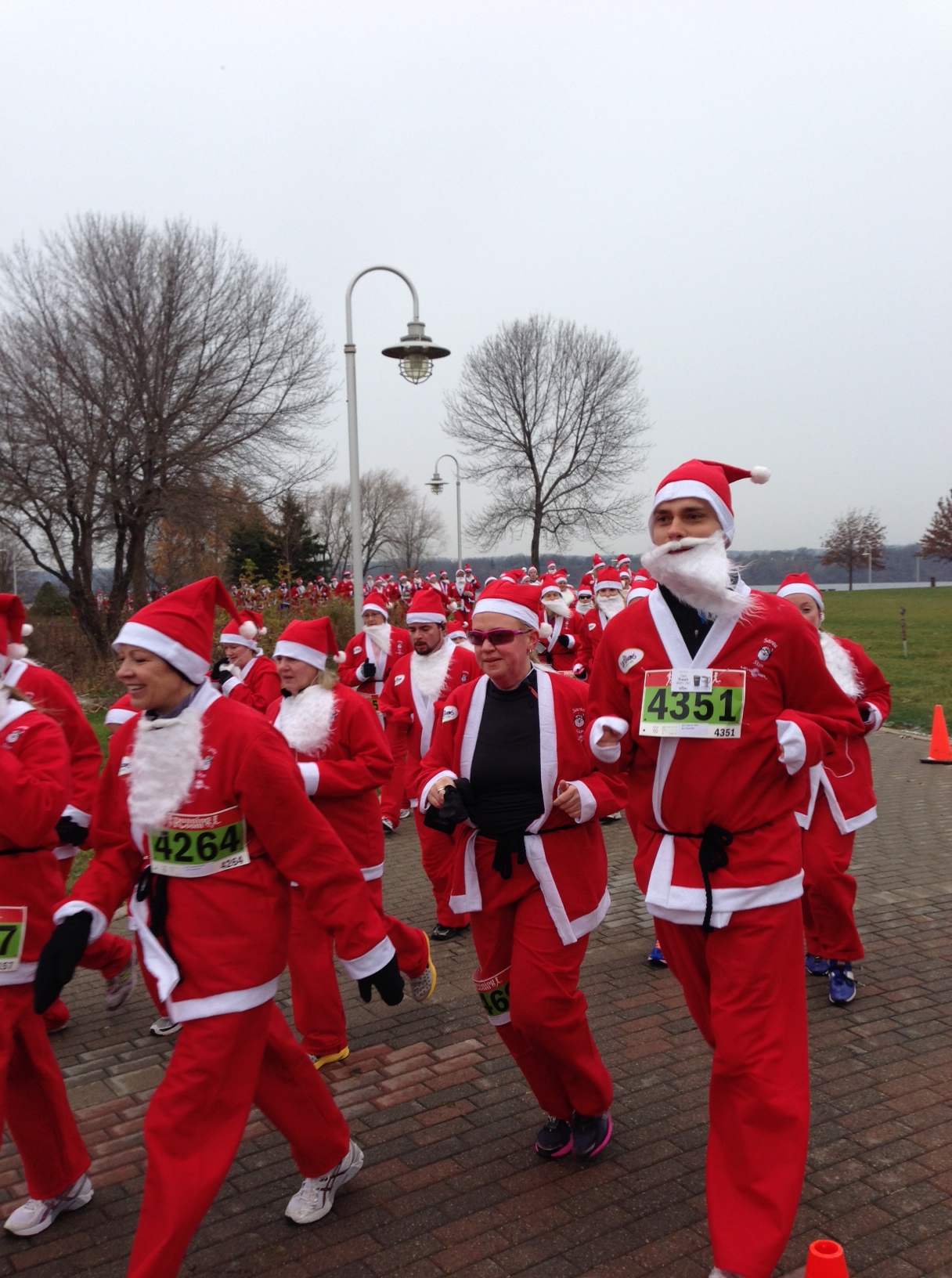
Over 500 runners dressed as Santa Claus took part in the inaugural Hamilton Santa 5k run on Sunday morning at Hamilton’s waterfront.

It was a windy, brisk morning, with scattered flurries. Despite the cold weather, runners came out in droves for the festive event.

All participants who entered the run were given a full Santa suit, including a beard.

Santas of all sizes take over Hamilton’s waterfront during the Hamilton Santa 5k run

The race started at the Hamilton Yacht Club, went through Pier 4 Park, looped around Bayfront Park, and finished out front of Williams Coffee Pub.

VR PRO, the company that held the event, already has a Santa 5k run in Burlington, Ontario and Burlington, Vermont, before adding a third Santa race in Hamilton.

Kelly Arnott, Race Director for VR PRO, said that despite the cold weather, the run was a success.

“The event was totally amazing today […] it was everything we expected. Young Santas, old Santas, fast Santas, slow Santas, tall Santas, short Santas – everything,” said Arnott.

Victor Gatundu, who won the 5-kilometre run with a time of 16:50, said the race was fun, but he had some technical difficulties during his run.

“It was a good race. It was very cold and windy out there, my gloves were too thin, and my [Santa] pants exploded during my run!” said Gatundu.

Arnott said all the participants had a great time and next year she expects double the amount of registrants.

“[Hopefully] next year we’ll get one thousand [participants],” she said.

The Santa 5k run raised funds for Hamilton’s Waterfront Trust and the Good Shepherd Hamilton.

Leave a comment

Filed under Sports

Province agrees on funding for the remediation of Randle Reef

The province has finally agreed on its contribution to help clean up Hamilton’s polluted harbour.

The Ministry of the Environment made the announcement on Monday that the province will contribute $46.3 million to the remediation of Randle Reef.

Randle Reef is a part of Hamilton Harbour and one of the most toxic sites in any of the Great Lakes. The area is 12-hectares of shale reef which has been polluted by toxic sediment – coal tar – from the conversion of coal into coke (which is a form of fuel).

Image

Mixed Use Plan for Randle Reef (Photo Courtesy: Environment Canada)

The province’s contribution to the cleanup tops off the funding needed for the remediation of the site. With its contribution, the $140 million capping plan can move forward.

Along with the province, Hamilton will contribute $14 million over a 10-year period; Burlington and the Halton Region will contribute over $4.3 million; the Hamilton Port Authority will chip in $14 million, and US Steel is investing $12 million in a containment facility, as well as a $2 million contribution.

Mark Johnson, a spokesperson for Environment Canada, says once everything is in place, clean up will begin in 2014.

“A key next step will involve the negotiation of legal project implementation agreements among all funders to confirm the details of contributions, roles and responsibilities in the management of the project, followed by the tendering of the project,” said Johnson.

A clean Randle Reef will not only mean reduced contaminant levels, but also some possible economic returns for the city of Hamilton.

“[The remediation] will also remove current restrictions on navigation and generate economic returns benefits during the construction phase and through the creation of valuable port lands,” said Johnson.

John Hall, co-coordinator of the Hamilton Harbour Remedial Action Plan, says some of the things seen since the remedial action plan started (back in 1985) is the exponential growth of the west end of the harbour in the last 10 years, with new parks and new trails.

“We’re going to see a […] continuation of the various improvements that have been made in the way of public amenities for people to visit the harbor, to recreate in the harbour. That will be the major thing, I think, that people will see,” said Hall.

Leave a comment

Filed under Economy

To be or not to be? That is the question for Tivoli Theatre

The Tivoli Theatre could be the latest piece to the James Street North revitalization puzzle, after rumours of a possible buyer for the dormant theatre have surfaced.

Belma Diamante, CEO of the Canadian Ballet Youth Ensemble, bought the theatre for just one dollar in 2004 (when the theatre was already closed) from the Sniderman family – after a wall collapsed on the south side of the building – and the theatre has been closed ever since.

Earlier this week, Diamante has revealed that there is a serious buyer but she has not disclosed who it is.

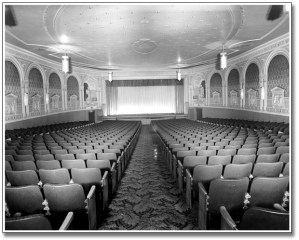
Tivoli Theatre, Circa 1947 (Photo Courtesy: Archive of Ontario)

Built in stages from 1875 to 1924, the Tivoli Theatre was originally a carriage factory and in 1924 it became a vaudeville venue and movie house. Later, in 1995 it became a venue for live stage until it was closed in 2004.

After the theatre was closed, the city spent over $300,000 to demolish much of the front of the building, including the façade. There have also been some contributions in the form of grants for building stabilization and heating improvements.

“The old auditorium has been empty for a number of years” said Mark Wilson, a member of the Head-of-the-Lake Historical Society who wrote about the history of Tivoli Theatre in the book Vanished Hamilton IV. “To revamp it, it’s going to be huge, huge money.”

Jason Farr, Ward 2 Councilor, says that a renovated Tivoli would further help with the James Street revival and there are numerous grants for which the potential buyer could apply.

“Whomever the purchaser is, if they’re not aware, there is a number of incentives for them,” said Farr.

The buyer could apply for CIT (Communities In Transition) grants, as well as heritage grants (the theatre is on the “Top Ten Most Endangered” list on Heritage Canada’s website).

“Whether it’s live music, or stage venues, or Die Hard, I have some very fond memories [in Tivoli Theatre] and I think a lot of Hamiltonians do too and to hear that there’s some progressive movements afoot is music to my ears,” said Farr.

1 Comment

Filed under Development, Economy, Heritage, History

Controversy on the waterfront?

Hamilton’s City Council now wants to discuss the possibility that Burlington pay more rent for LaSalle Park.

La Salle Park is a 56-acre piece of waterfront property on Burlington’s lakeshore that is operated and maintained by the City of Burlington, but owned by the City of Hamilton.

The Park consists of two banquet halls, a marina, waterfront trail, and sports fields.

Geraldo’s Banquet and Conference Facility at LaSalle Park

The City of Hamilton is receiving one dollar a year from the City of Burlington under the current agreement that was signed in 1983. The deal is set to expire in 10 years time.

Hamilton’s council voted Tuesday for the Greater Bay Area Subcommittee – a committee consisting of members from both Hamilton and Burlington’s City Council – to begin discussions on the LaSalle Park agreement and to establish a “fair market value” lease.

Ward 4 Hamilton Councilor Sam Merulla moved the motion on Tuesday.

“You have your banquet centre there, as well as your marina. If you were to fully exploit the marina’s potential and look at the nearly 300,000 dollars they’re making from the banquet centre, the one dollar per year is not a fair market value for the land” Merulla said.

However, not everyone agrees with the motion. Ward 1 Burlington councilor Rick Craven (a member of the Greater Bay Area Subcommittee) says that changes to the lease are not on the agenda.

“The subject on the agenda right now […] is the long term expectation that ownership of the park will transfer to the City of Burlington. Under what conditions and for what in return is going to be a very lengthy agenda. That is on the agenda,” said Craven, “increasing the lease or the rent in the short run is not on the agenda.”

Councilor Merulla said that if an agreement isn’t reached before the lease is up Hamilton could possibly keep the land for waterfront development. However, Councilor Craven said that development can’t and won’t happen because under Burlington by-law the parkland is not zoned for that purpose.

“He’s wrong,” said Craven. “His comments have not been helpful.”

Leave a comment

Filed under Economy

The Final Labour Day Classic

Canada’s National Anthem being performed before the last Labour Day Classic at Ivor Wynne Stadium.

Even though the Toronto Argonauts defeated the Hamilton Tiger-Cats in a shocking fourth quarter comeback, the final Labour Day Classic at Ivor Wynne Stadium was a game to remember not only for it’s dramatic ending, but also from the overall Labour Day experience that’s never failed to disappoint.

The Labour Day Classic at Ivor Wynne Stadium is known around the league as one of the most intense, important, and hotly contested games of the regular season. Toronto Argonaut players hate it, Hamilton Tiger-Cat players love it, and just about everyone in Hamilton wants to be there for it.

Scott Park, which is located across the street from the south side of the stadium, was over-capacity with tailgaters consuming their fair share of alcohol and sausages hours before kick off. The atmosphere surrounding the stadium before the game was almost celebratory, with a cheerful crowd passing the turnstiles, ready to absorb every second of a famous last game.

Ivor Wynne Stadium is a relic; a stadium of times past; a reminder of better days in The Hammer, when jobs were in abundance and industry was booming. Previously named Civic Stadium, it’s inception was in 1928, ages before modern monolithic, boring stadiums. With wood seating, pillars blocking fans views in some sections of the south side, and no variety of concessions, it’s easy to see why management is so eager to see a new stadium erected in it’s place. Most Tiger-Cat fans, however, would disagree.

The stadium is sandwiched between Melrose and Balsam Avenue in East Hamilton, where many would call the “heart” of the city. Parking is scarce, so often you find yourself parking on the driveways and lawns of residents (thankfully, my grandfather lives a block away and always saves a spot on his front lawn for me) within the areas surrounding the stadium. If you’re taking the HSR, you get a free shuttle ride upon brandishing your ticket as the city increases the transit schedule for the additional ridership the game brings.

In an unexpected twist, the halftime show was the Syracuse University Orangemen marching band. They were seated in section 21 during the game (directly behind where I was seated – awesome!) and were a great boost to the home fans, performing Hamilton chants and classic marching band songs in-between plays. Needless to say, they overshadowed the traveling Toronto Argonauts band, “The Argonotes”.

A perfect day was only mildly disrupted by a tough loss. But one thing is for certain, it’s going to be a very sad day when this stadium is torn down. Many memories were made here, over several generations. It will be interesting to see how the new stadium will turn out, however. Will they change the stands from North-South to East-West? Is there going to be more than just beer and hot dogs? And will the citizens of this passionate city accept their new mecca?

Bring on 2015 and the new Labour Day traditions that will follow. Us Tiger Cat fans are hungry for more.

Oskee Wee Wee.

Leave a comment

Filed under History, Opinion, Sports